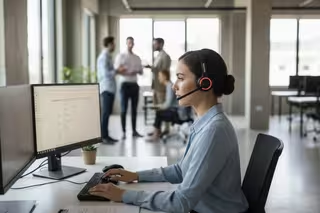

For call center agents and managers seeking to maximize productivity, the top five Bluetooth headsets are the Jabra Evolve2 65, Poly (Plantronics) Voyager 4220 UC, Sennheiser SC 660 USB, Logitech Zone Vibe 100, and Poly Voyager Focus 2.
These enterprise-grade models are specifically engineered to enhance efficiency through superior active noise cancellation (ANC), exceptional microphone clarity, extended battery life exceeding 15 hours, and seamless integration with Unified Communications (UC) platforms like Microsoft Teams and Zoom. Investing in a professional wireless call center headset directly improves agent mobility, reduces auditory fatigue, and elevates customer interaction quality, leading to measurable gains in key performance indicators (KPIs) such as Average Handle Time (AHT) and Customer Satisfaction (CSAT) scores.
The Wireless Revolution in Contact Center Operations
In the dynamic ecosystem of a modern contact center, agent performance is the cornerstone of business success. Every tool deployed must serve a strategic purpose: to enhance productivity, ensure well-being, and deliver exceptional customer experiences. The transition from tethered, wired headsets to advanced Bluetooth and DECT wireless solutions represents a critical technological evolution. A specialized call center Bluetooth headset is now a fundamental component of an efficient workspace, not merely an accessory. These devices empower the hybrid workforce, facilitate ergonomic flexibility, and utilize sophisticated audio processing to ensure crystal-clear communication. This comprehensive guide analyzes the top 5 Bluetooth headsets for call centers designed to enhance your efficiency, providing the insights needed to make an informed, impactful investment for your team.
Why a Specialized Wireless Headset is Crucial for Call Center Efficiency
The acoustic and operational demands of a contact center are unique. Consumer-grade audio devices fail to meet the rigorous requirements of professional voice communication. A best call center Bluetooth headset is engineered to address specific challenges:
- Advanced Noise Cancellation & Microphone Technology: Professional headsets employ hybrid Active Noise Cancellation (ANC) to neutralize ambient office noise (e.g., colleague conversations, keyboard clatter, HVAC systems). More importantly, they feature multi-microphone arrays with algorithms like wind noise reduction and voice isolation to transmit the agent's voice with broadcast-quality clarity.
- Ergonomic Design for All-Day Comfort: With wear times often exceeding 8 hours, materials matter. Professional models use memory foam ear cushions, adjustable headbands with minimal clamping force, and lightweight polymers to prevent fatigue and repetitive strain injuries.
- Enterprise-Grade Connectivity & UC Optimization: Beyond standard Bluetooth, many models include a dedicated USB-A/USB-C wireless adapter for a more stable, low-latency connection. Native certification for Microsoft Teams, Zoom, RingCentral, and Cisco Webex enables dedicated function buttons, status synchronization, and one-touch join/end capabilities.
- Extended Operational Uptime: Battery life is mission-critical. Leading headsets offer 20-37 hours of talk time, with fast-charge technologies that provide 2-3 hours of use from a 15-minute charge, ensuring continuity throughout long shifts.
- Intelligent Features for Workflow Automation: Features like automatic answer/end sensors, flip-to-mute microphones, and busy-light indicators streamline call handling, reducing cognitive load and manual actions.
Detailed Analysis: Top 5 Bluetooth Headsets for Call Centers
The following selection is curated based on audio performance, durability, feature sets, and overall value proposition for U.S.-based contact centers. Each model represents a leader in a specific category of professional audio.
1. Jabra Evolve2 65: The Benchmark for Hybrid Work Productivity
Jabra, a subsidiary of GN Audio and a titan in enterprise sound solutions, delivers a quintessential best call center headset wireless experience with the Evolve2 65. It is a frequent fixture in enterprise IT procurement lists.
- Key Efficiency-Enhancing Features: Its cornerstone is the Jabra Advanced Active Noise Cancellation, which can be adjusted via the Jabra Sound+ app. The integrated busy light—which automatically activates during a call—is a simple yet profound tool for minimizing workplace interruptions in open-plan environments. With a 40mm speaker and a 4-mic array, it delivers exceptional sound both ways. Its 37-hour battery life and best-in-class Microsoft Teams certification make it a powerhouse for Microsoft-centric organizations.
- Entity Relationships: Jabra → GN Audio → Enterprise Solutions. Direct integration with → Microsoft Teams, Zoom, RingCentral. Competes with → Poly, Sennheiser.
- Ideal For: Agents in dense, noisy contact centers who require maximum focus, deep integration with the Microsoft 365 ecosystem, and a reliable, all-day stereo headset.
2. Poly (Plantronics) Voyager 4220 UC: The Ultimate in Mobility and Awareness
Born from the legacy of Plantronics—a name synonymous with call center headsets—and now under the Poly brand (merging Polycom and Plantronics), the Voyager 4220 UC defines the modern mono Bluetooth headset.
- Key Efficiency-Enhancing Features: Its genius lies in Poly Acoustic Fence technology. This patented system uses sensors to create a "zone of focus," capturing only voice within a short, precise range while eliminating noise beyond it. The multipoint connectivity pairs with two devices seamlessly. The iconic boom arm mute function, where raising the arm automatically mutes the call, is a tactile efficiency booster that becomes second nature.
- Entity Relationships: Poly → HP (following acquisition). Evolved from → Plantronics legacy. Key Technology → Acoustic Fence. Competes in mono segment → Jabra Engage series.
- Ideal For: Agents who value maximum situational awareness, need to move frequently, reference multiple monitors or physical documents, or simply prefer the lightweight, single-ear design for thermal comfort during long sessions.
3. Sennheiser SC 660 USB: The Audiophile Standard for Critical Listening
Sennheiser, a German audio specialist revered for studio and hi-fi equipment, applies its engineering prowess to the contact center with the SC 660. This model is for those who prioritize audio fidelity above all.

- Key Efficiency-Enhancing Features: It utilizes Sennheiser's NoiseGard hybrid adaptive ANC, which actively adjusts to your environment. The audio drivers are tuned for natural, accurate voice reproduction, reducing listener fatigue caused by harsh or tinny sound. It often employs DECT 6.0 technology instead of standard Bluetooth, offering greater range (up to 350 feet), enhanced security, and interference-free operation in dense office settings. The build quality is exceptionally robust.
- Entity Relationships: Sennheiser → Sonova (hearing healthcare group). Technology → NoiseGard ANC, DECT. Positioned as → Premium Audio Specialist. Competes on fidelity → Jabra Evolve2, Poly Focus 2.
- Ideal For: Technical support specialists, quality assurance analysts, and escalations teams where discerning subtle audio cues, tone of voice, or complex technical information is paramount to resolving customer issues.
4. Logitech Zone Vibe 100: The Cloud-Optimized, Featherweight Contender
Logitech, a dominant force in PC peripherals, leverages its design expertise to create a compelling, modern option with the Zone Vibe 100. It appeals to the evolving, often remote, cloud-based workforce.
- Key Efficiency-Enhancing Features: Weighing a mere 5 ounces, its ultra-lightweight design is its most immediate benefit, eliminating pressure points. The flip-up, mute-to-mute microphone is intuitive. It includes a versatile USB-A/USB-C Bluetooth adapter for a reliable, plug-and-play connection optimized for VoIP applications. It is broadly certified across all major UC platforms, making it agnostic and flexible.
- Entity Relationships: Logitech → Logi. Market Position → Cloud/Remote Work Specialist. Design Philosophy → Ergonomic Minimalism. Competes with → Consumer-prosumer crossover models.
- Ideal For: Remote or hybrid agents, organizations with a younger demographic appreciating modern aesthetics, and anyone for whom traditional headsets feel heavy or cumbersome. It's an excellent best call center Bluetooth headset for comfort-first users.
5. Poly Voyager Focus 2: The Intelligent, Over-the-Ear Powerhouse
Another flagship from Poly, the Voyager Focus 2 is an over-the-ear headset packed with intelligent features designed to automate routine tasks and enhance concentration.
- Key Efficiency-Enhancing Features: Its Smart Sensor technology is a standout, automatically answering a call when you put the headset on and ending it when you take it off. Combined with hybrid ANC with three microphones and the familiar flip-to-mute boom mic, it creates a highly efficient user experience. The audio is specifically tuned for voice, and the memory foam ear cushions provide excellent passive noise isolation.
- Entity Relationships: Poly → HP. Feature Set → Smart Sensor Intelligence. Product Line → Voyager Series (with 4220 UC). Competes directly with → Jabra Evolve2 65.
- Ideal For: Agents in persistently noisy environments who want the superior isolation of an over-ear design, appreciate feature automation to streamline their workflow, and desire a premium, durable build.
Key Decision Factors: Building Your Selection Framework
Choosing the best call center Bluetooth headset requires a structured evaluation beyond brand loyalty. Consider these topical clusters:
1. Audio Performance & Noise Management
- Microphone Type: Boom mics (Jabra, Poly Focus) typically offer superior noise rejection versus built-in mics (Zone Vibe).
- Noise Cancellation Type: Hybrid ANC (combining feedforward and feedback mics) is the professional standard. Understand the specific technology (e.g., Acoustic Fence, NoiseGard).
- Speaker Quality: Driver size (e.g., 40mm in Evolve2) and tuning for voice versus music impact clarity and fatigue.
2. Design, Comfort & Durability
- Form Factor: Mono vs. Stereo is a primary decision based on need for ambient awareness versus immersive focus.
- Materials: Look for protein leather or memory foam ear cushions and metal-reinforced headbands for longevity.
- Weight: Lighter models (< 7 oz) significantly reduce strain over long periods.
3. Connectivity & Software Ecosystem
- Wireless Standard: Bluetooth 5.0+ is standard. DECT (Sennheiser) offers an alternative with longer range.
- USB Adapter: A dedicated dongle ensures a stable, PC-managed connection, crucial for IT departments.
- Management Platforms: Jabra Direct, Poly Lens, and Logitech Sync enable firmware updates, device configuration, and fleet management—a key E-A-T signal for enterprise readiness.
4. Battery & Shift Sustainability
- Rated Talk Time: Ensure it exceeds your longest shift by at least 50%. A 15-hour rating supports a 10-hour shift with buffer.
- Charging Solutions: Qi wireless charging (available on some Jabra models) or desktop charging stands can simplify daily routines.
Advanced FAQ: Addressing Core Search Intent
Q: How do I justify the ROI of premium Bluetooth headsets to management?
A: Frame the investment around key metrics. Premium headsets can reduce Average Handle Time (AHT) by improving audio clarity and reducing repetition. They directly impact Customer Satisfaction (CSAT) and Net Promoter Score (NPS) through clearer communication. Furthermore, they lower agent attrition related to discomfort and reduce IT support tickets for faulty, low-end equipment. A simple cost-per-agent-per-day analysis often reveals a rapid payback period.
Q: What specific features help with common call center noise problems?
A: For background chatter, hybrid ANC is essential. For consistent low-frequency noise (HVAC, fans), look for headsets with strong passive isolation (dense ear cushions). For agent-side keyboard noise, technologies like Poly's Acoustic Fence or side-toned microphone mute (where agents hear their own typing and self-correct) are highly effective.
Q: Are there security considerations with wireless headsets in a call center?
A: Yes. Enterprise models offer enhanced security features. DECT technology has inherent encryption. Bluetooth headsets using a dedicated USB adapter often operate on a separate, encrypted protocol. For PCI-DSS compliant environments, ensure your chosen model and its connection method meet your security team's requirements. Managed software (e.g., Poly Lens) also allows for secure, centralized control.
Q: How does headset choice impact agent health and wellness initiatives?
A: Significantly. Ergonomic headsets reduce the risk of musculoskeletal disorders in the neck and shoulders. Superior noise cancellation lowers cognitive fatigue and stress by reducing the brain's effort to filter noise. Comfortable gear directly improves agent engagement and morale, contributing to overall well-being and productivity—a key component of modern workplace experience (WX) strategies.
Q: Can these headsets integrate with legacy call center infrastructure?
A: Many can, but it may require additional components. Most modern headsets connect via USB to a softphone on a computer. To connect to a traditional desk phone (like an Avaya or Cisco IP phone), you may need a Bluetooth-enabled desk phone or a third-party Bluetooth adapter that plugs into the phone's handset port. Always verify compatibility with your specific telephony environment.
A Strategic Investment in Human-Centric Technology
Selecting from the top 5 Bluetooth headsets for call centers is a strategic decision that reverberates across customer experience, agent performance, and operational cost. The leaders from Jabra, Poly, Sennheiser, and Logitech have engineered solutions that directly target the pain points of the professional communicator. By prioritizing enterprise-grade noise cancellation, ergonomic design, intelligent features, and robust UC integration, you are not just purchasing hardware; you are deploying a tool that enhances efficiency at its core.
The optimal choice hinges on your specific environment: the noise floor of your center, your primary UC platform, your agents' form-factor preferences, and your IT management needs. Evaluate, test with pilot groups, and consider the total cost of ownership. In the competitive landscape of customer service, equipping your team with the best audio technology is a clear, actionable step toward achieving superior results, enhancing agent satisfaction, and building a more resilient, efficient operation.
На правах реклами


